AI image detector: how do you spot fakes in 2025?
Imagine scrolling through your feed and wondering: is this photo real or AI-generated? Wait, you probably don't even have to imagine this. We are already living in this reality. In fact, in 2023 researchers were estimating 15+ billion AI images created, roughly 34 million every day since the global launch of generative AI.
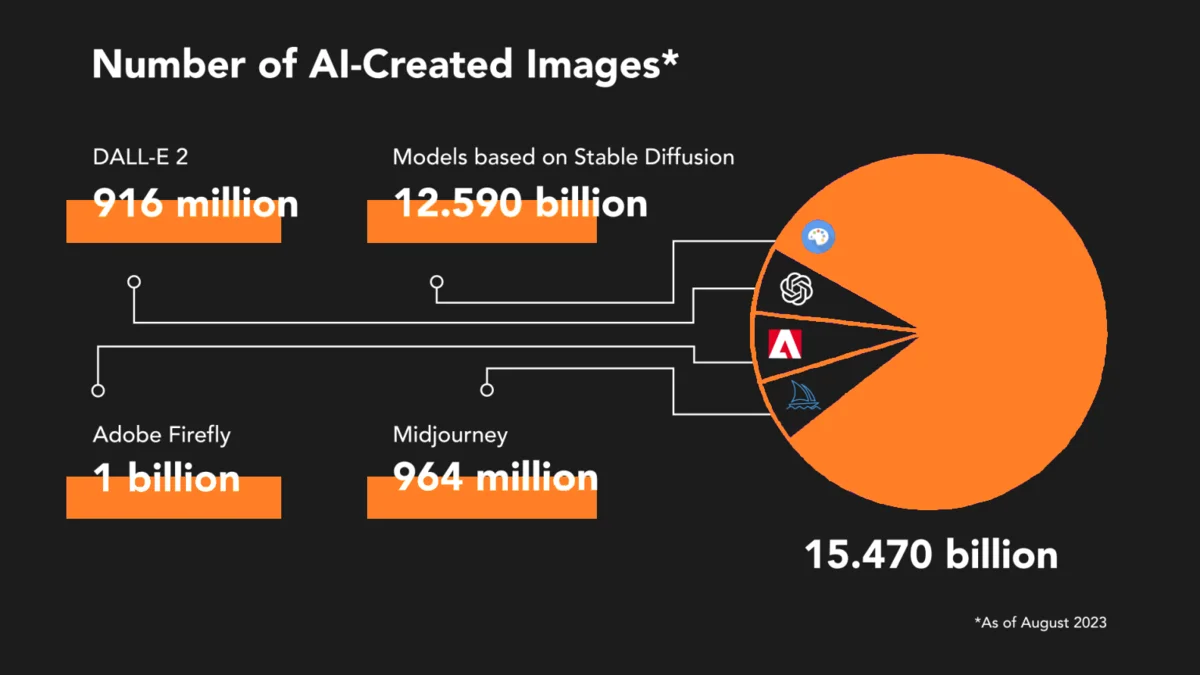
And if we estimate how many images were generated in total, taking into account those 34 million images per day, then we get about 30 BILLION images. It means that there's an AI-generated pic for every 4 people that have ever lived on Earth. For the entire history of mankind. That's… a lot. It means your eyes can no longer be trusted, cause the internet is flooded with AI. 'Seeing is believing' doesn't work anymore.
Fake images are being used in scams every day. Trust is eroding fast (studies call deepfakes and AI disinformation a top global risk), but it doesn't stop the flood of fakes. In this guide we'll explain how fake image detectors work, why they're urgent, and how to detect AI generated images in 2025 (with or sometimes even without a fancy tool).
Why is the AI image detector hotter than ever?
As the internet grows, real photos get lost in the noise.
We're in the middle of an AI image explosion. While you are reading this sentence, there are hundreds of new AI-generated images appearing online. And neither you, nor us can tell the real ones from the fakes with the eyes only.
The whole situation with AI driven fraudulent activities is getting really scary. In 2024 only, consumers lost a record $12.5 billion to fraud, as The Federal Trade Commission (FTC) reported. 2025 tendencies are not very bright as well. In the first 4 months deepfake frauds alone led to losses exceeding $200 million. Ouch.
AI-generated scams and fraud
Yep, criminals are in love with some good pictures!
We're so used to seeing all these 'deepfake video scam' cases and news, that we seem to forget about images. But almost no scam can go without an AI-generated picture. It doesn't matter whether it's a fake identity or an AI payment receipt, AI makes it easy to create thousands of them on demand in SECONDS.
Romance scams
Romance scammers on dating apps now use AI-generated profiles to charm victims.
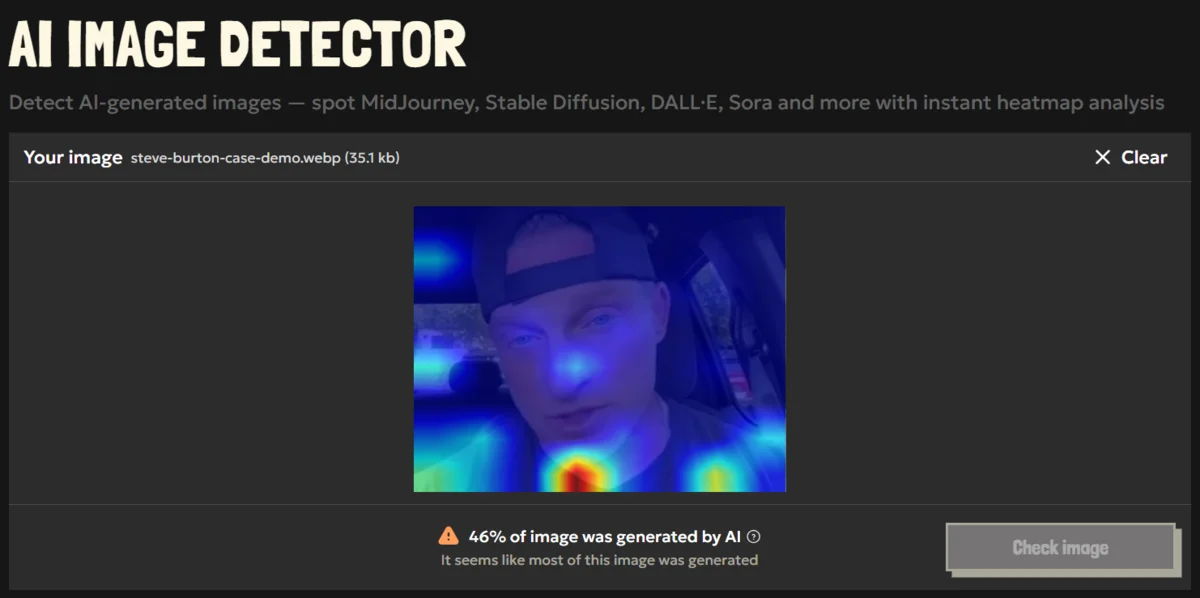
In the Steve Burton case scammers used one of the most common techniques to manipulate a vulnerable person with strong emotional connection and love promises. She received photos, videos and voice messages that made her believe she was really talking to a General Hospital star. But only one check through an AI image detector instantly destroys that fairy tale. But 46% is not that much, is it? Indeed, 46% is not so much, but we suppose that the image was generated only partially. Our assumption is that the scammers used real photos of Steve Burton and put a 'mask' with his face on real videos of another man (including the one where he speaks from a car). That's why only 46%. That's why as many as 46%! In all cases, 46% is enough to get you concerned.
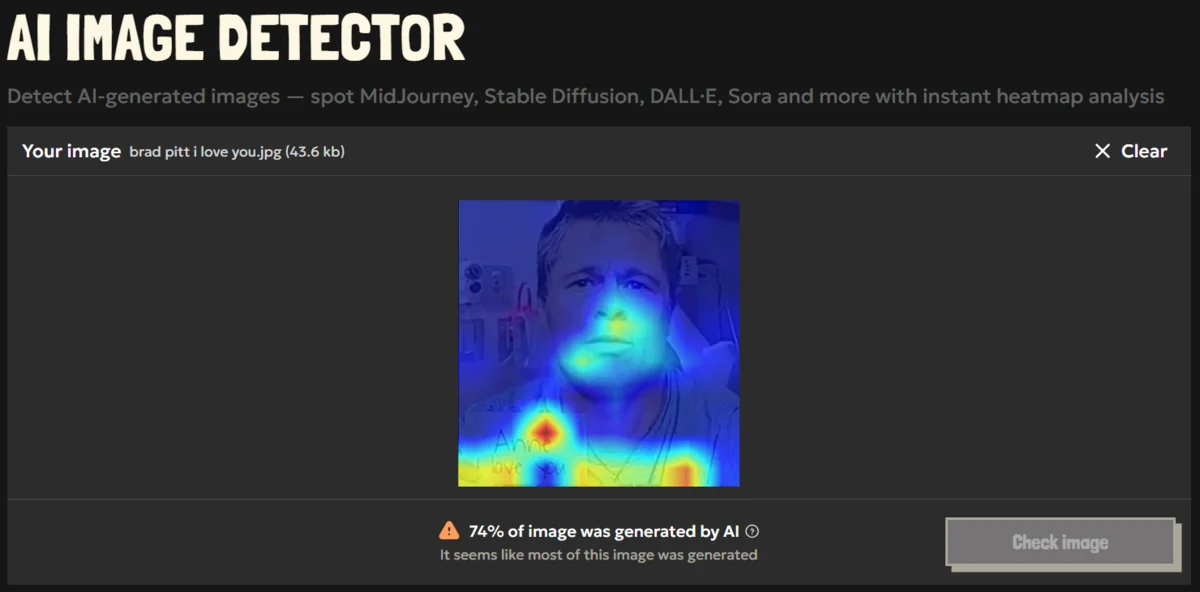
One more case had Brad Pitt in 'cancer treatment' as a lure. A French interior designer handed over £700,000 to scammers posing as a sick Hollywood star and was left homeless and broke. And again, one simple check through isFake AI image detector could save the fortune.
But romance scam is not the only type of online fraud that uses AI. When we say that internet is completely flooded with fakes, we mean it:
Viral celebrities news
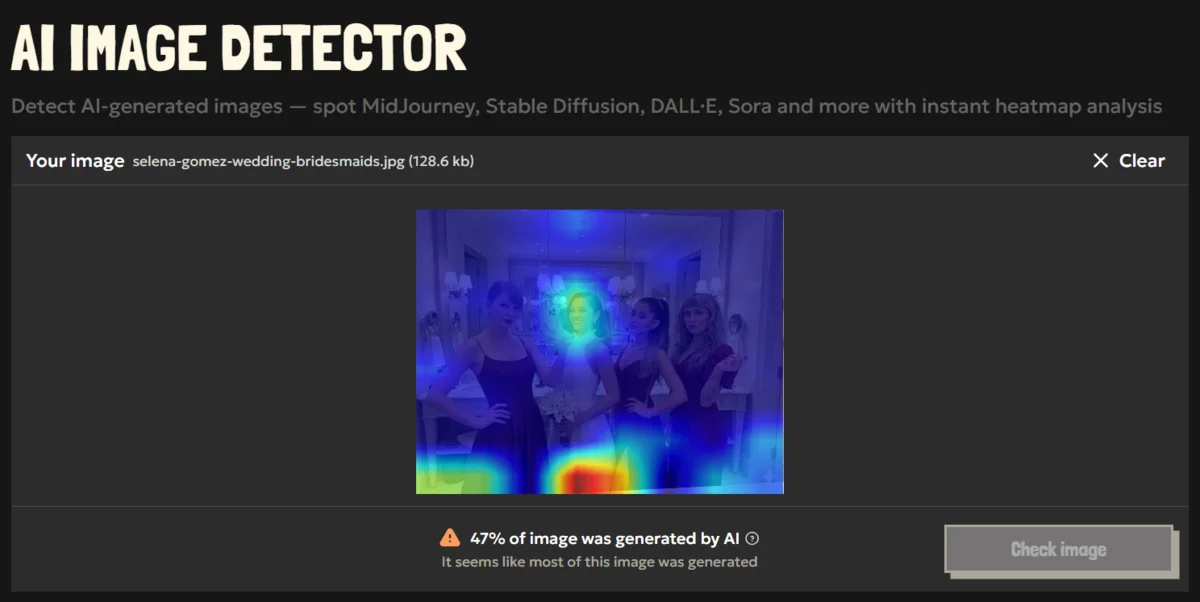
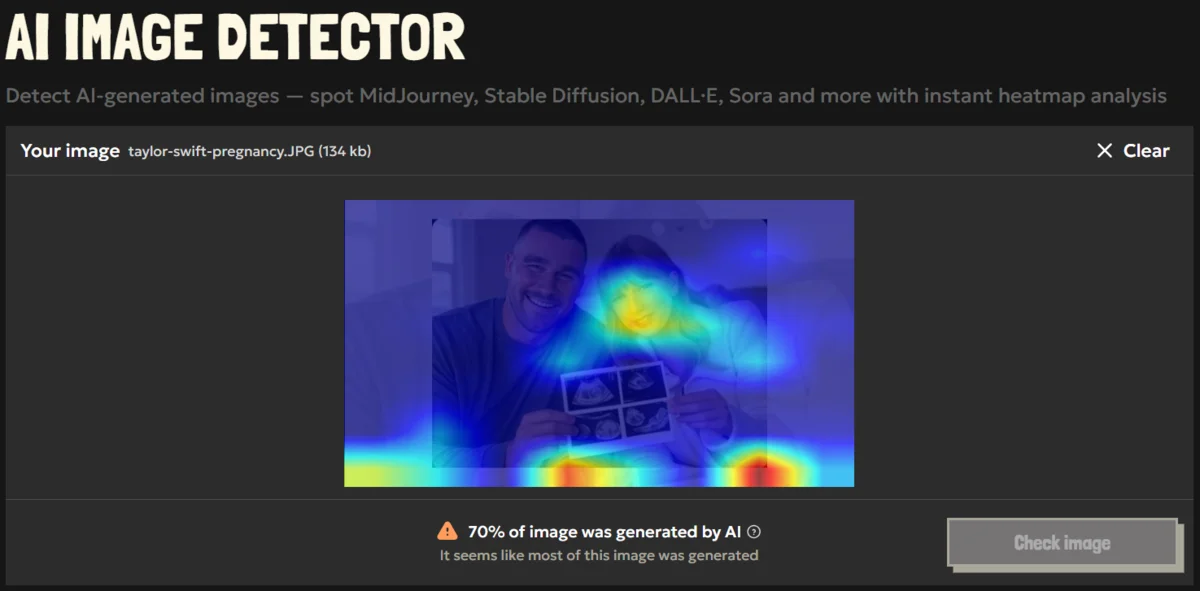
These are 2 recent examples of AI-generated fakes of celebrities. Such posts are meant to get as many views as possible, get attention, and go viral. And it works! Accounts that post such images almost immediately get new subscribers and engagement, which influence the future algorithms. And it already doesn't matter if this particular post gets blocked or deleted. Social media will remember the activity that this account got and will recommend it more often.
Business fraud

'Just because the account has my photo doesn't mean it's me.'
– Mark Read, executive of WPP, after being targeted by deepfake scam.
Corporate scam (or so-called spoofing) is a growing trend. Recall the Arup case: fraudsters created a full meeting of fake 'AI colleagues' and drained $25M. In similar style, companies report emails or meetings where AI-generated images of executives on their logos lure employees into handing over funds.
Fake product images and reviews
Using AI-generated content in sales is not rare among sellers. And it's one thing if AI enhanced images are used to attract more attention to a product (even though we can't completely approve that method), but it gets much worse when scammers create a totally fake product profile. People fall for 'perfect' goods with 'perfect' reviews and comments, make a purchase and later find themselves fooled. Unfortunately, it might be hard to identify those fake images. Thankfully, you don't need to do it manually – use our AI image detection tool.
Fake news
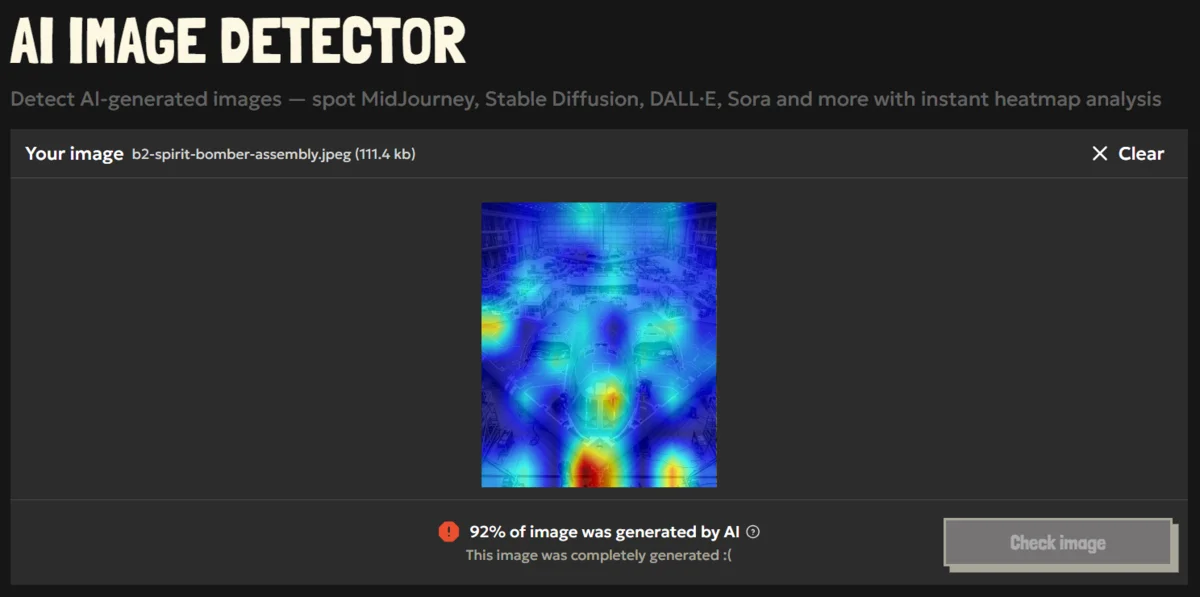
Fake news might touch upon topics that are better to stay real, like in our example. Any military, political or economical provocation shapes how people perceive the world.
And as soon as there is news about a flood, tsunami or a meteorite flying close to Earth, X (formerly Twitter) and Instagram are getting flooded. Not with the actual disaster, but with fake AI images and videos. Anything can be generated these days, go viral and create a wave of fake news. Not sure if we really need this additional boost of anxiety.
Catfishing, using (non-existent) talent
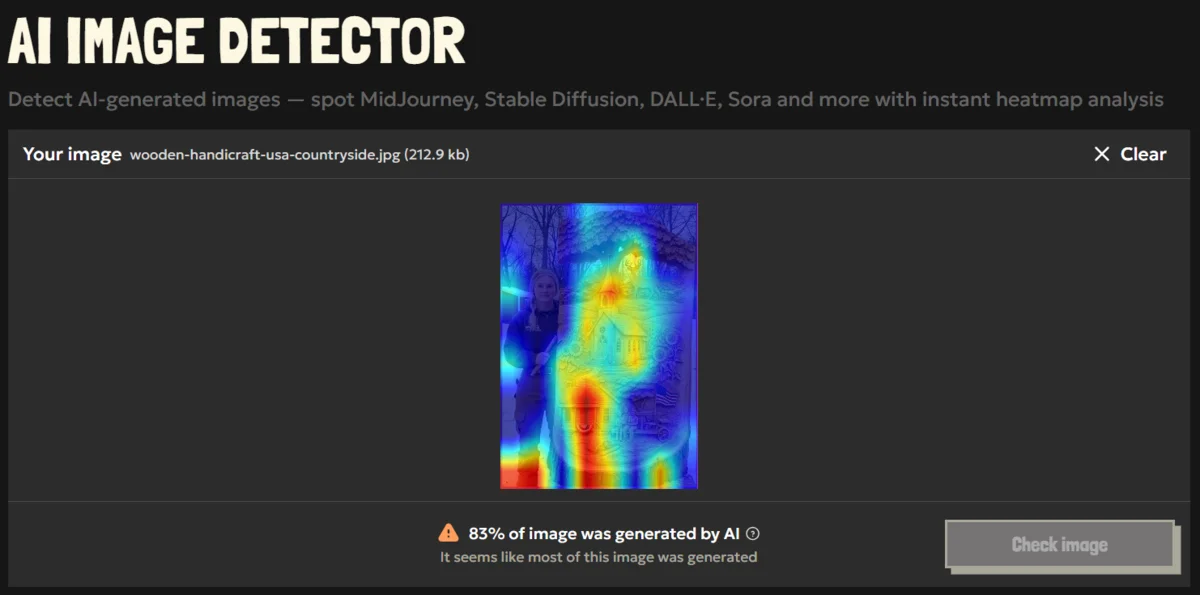
This is one more case where the intention for the author is going viral online. But if the account gets another 10K subscribers it's not as dangerous as if it starts scamming subscribers out of money offering them to make a similar craft to order. Online shopping gets less safe, so we would not recommend sending money to private sellers with no guarantees that the product is real. And that the seller exists himself.
Scam on lost pets images
In autumn 2025 different news outlets and social forums discussed a new cruel case of AI-generated images used for online scam and fraud. Several victims contacted police with pretty much the same story. After losing their pet they have posted an online image of it in an attempt to find it, but instead of getting their loves back, they took the same bait. Scammers used the posted image to generate a photo of a 'found' animal, contacted the owners and asked them for 'compensation'.
Detecting fakes is self-defence. Checking for Stable Diffusion, DALL-E or Midjourney fingerprints is essential. As the old saying goes, measure twice, cut once.
Let us show you how it's done.
What is AI image detection and how does it work?
Think of an AI image detector as a digital forensic specialist for pictures. It's a tool (often a web service or app) that analyzes a photo and gives you a verdict: real or AI? Under the hood, it uses machine learning and image forensics to sniff out the subtle fingerprints that generative models leave behind.
In practice, you feed the image into the detector and it crunches the pixels through a neural network trained on huge datasets of real and AI-generated pictures. These tools learn the tiny anomalies that humans can't see. For example, AI generators often produce unnatural pixel patterns or noise in certain areas. They might get textures, hair strands or reflections slightly wrong. An advanced detector will flag these hints. It may also check the image's metadata (EXIF data) for telltale clues. That's why in many cases you get the result with the same pattern on a heatmap. That's it – the AI signature that goes unnoticeable for a human eye.
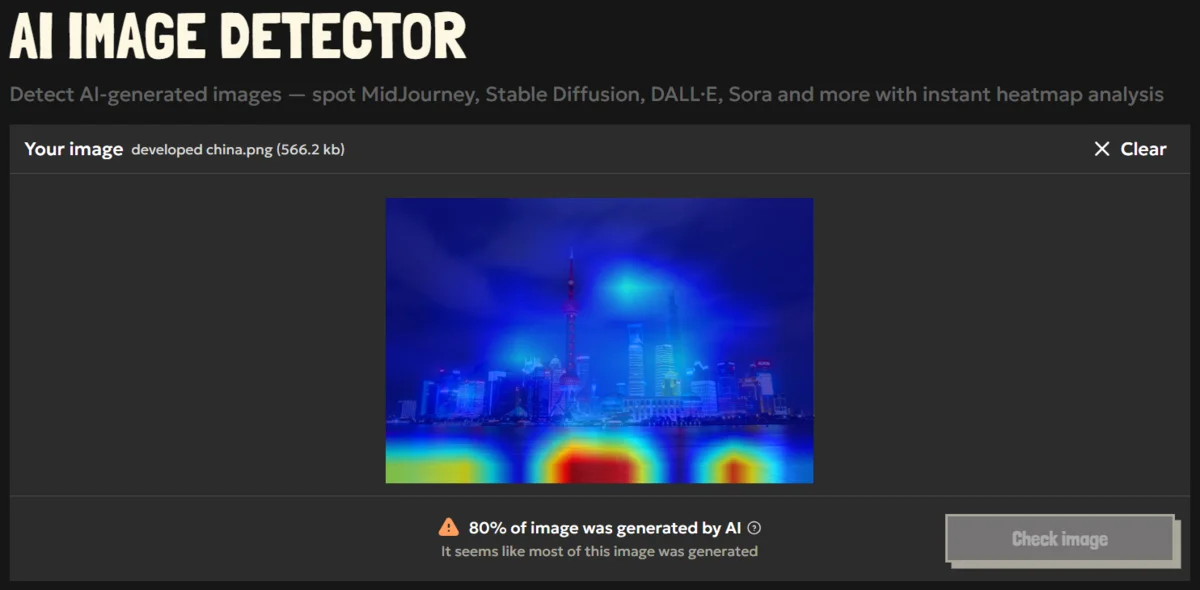
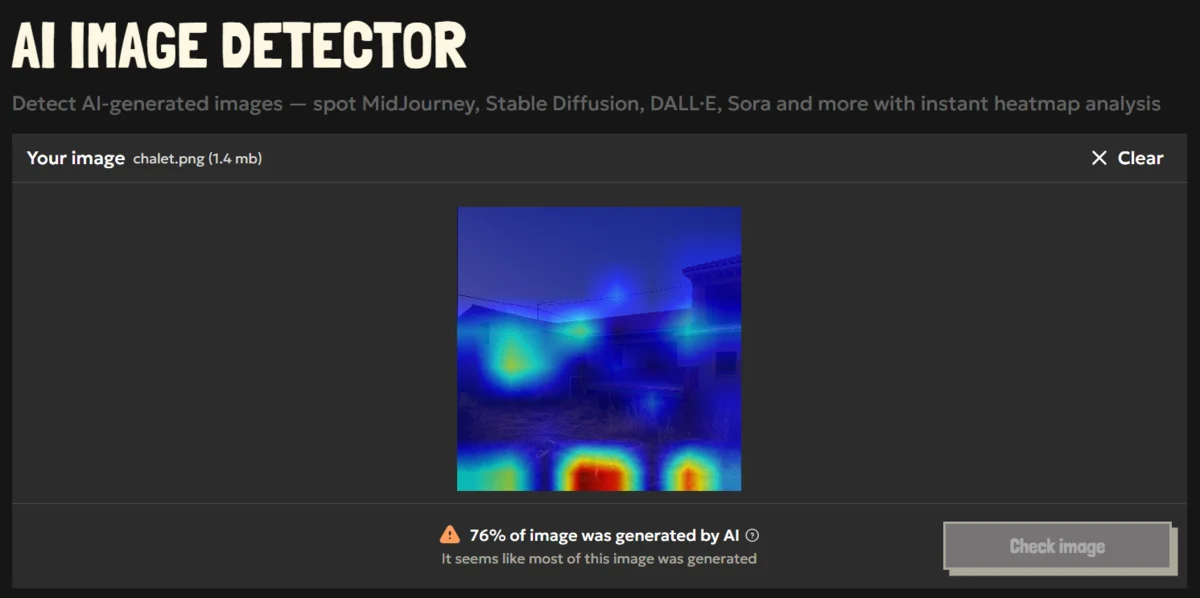
OK, we got it – the AI photo checker basically tries to find the artifacts and inconsistencies in a picture. What's next?
Next, you get the result. We do not try to immediately put a label on any content, that's why we do not say 'It is real' or 'It is AI'. We use the confidence scores that reflect the model's opinion on an image being AI-generated. So, those 46% from Steve Burton case mean that our model is 46% sure that AI was used when creating an image. That way of perceiving the results should make you see it a little bit differently.
Additionally, we use a heatmap. Besides the patterns that show the AI signature on an image, the heatmap is meant to show those areas of the image that were most likely generated or edited by AI. The red colour shows the most suspicious parts.
How to notice AI-generated images
Even without fancy software, there are visual clues. Here's a checklist of common 'tells' that an image might be synthetic:
- Eyes, hands, and fingers. People always have two eyes, some wrinkles, subtle asymmetry… and five fingers. AI often flubs these, so check it first.
- Hair, earring, teeth. Pay attention to these details as well, because AI tends to struggle with tiny patterns. Earrings or other accessories may be mismatched or wrongfully connected to other parts of the body.
- Background and objects. OK, the main characters look fine (and, thank Goodness, have 5 fingers). Then check the backgrounds. It might have huge artifacts there (like human silhouettes with three hands or cars without wheels). Look for objects that don't belong, strangely warped edges, or backgrounds that suddenly blur or distort.
- Lighting and shadows. AI models can occasionally ignore how real light works and make mistakes in shadows. Also check reflections (in mirrors, water, glasses) – if something's missing or ghostly, it might be a fake (or a vampire).
- Text and signs. Text can immediately give out a fake. Look for signs, screens or car numbers and check if it's gibberish or not.
Remember, none of these alone is 100% proof (+AI is getting better at fixing hands and teeth). If you spot any of these red flags, it's worth running the image through a free AI image detector.
How to protect yourself from AI images
Fortunately, you don't have to be paranoid, but just cautious. Here are some quick tips to protect yourself from falling for a deepfake:
- Stay skeptical. There's hardly a chance of getting anything for free. Especially, if it sounds like 'President is giving away free cars!' or 'The new investment program guarantees $1000 after the first month!' Before you share or act on something shocking, ask: Is this real or AI?
- Check sources. Trust reputable news and official channels, not some suspicious accounts with 500 subs. If a juicy story only appears on random social posts and not on established media, be wary. Scammers often rely on the fact that we skim headlines – always click through to see if credible outlets report the same thing.
- Be careful on social media and be selective with whom you talk to online. And, of course, never share your private info with people you barely know. That's not even a recommendation, but a global safety rule.
- Digital hygiene. Keep devices secure. Check the emails and messages you receive and the links you click. Detect not only AI images, but AI text, AI videos and AI audio all in one place. Because the threat might come in any form and you better be ready.
- Fact-checking. It's essential to have strict verification policies, especially in business and journalism – both for yourself and for people that work for you. Fact-checking EVERYTHING is the key to success and safety.
- Staff training. As a company, introduce regular qualification improvement seminars and activities. Among the most important skills is never acting on a request (like a money transfer) just because it comes via a boss's profile. There's always an option to confirm a transaction via a known phone or address first.
And, the most important:
- Use AI image detector. If you suspect a photo, run it through a free AI image detector and get your result in seconds. Find the thorough instructions below.
How to check images using isFake.ai
Let's see how an AI image checker works in practice. It's free and easy to use:
- Go to the AI Image Detector
- Upload or paste your image
Click 'Browse file' (or drag-and-drop). The tool accepts common formats (JPG, JPEG, PNG, HEIC, WEBP) with a maximum size of 15MB. - Run the scan
Press 'Check image'. The detector analyzes the photo in seconds. - Read the result
You will get the score and the heatmap results. More on how to read detection results properly – in our article.